A fake Cabaïa store copied the catalogue and cut every price by 80%.
Our sweep found a live store at cabaiastore.com using the CABAIA name and selling Cabaïa products through a complete French-language storefront. The scanner classified it as a likely copycat at 96% visual similarity.
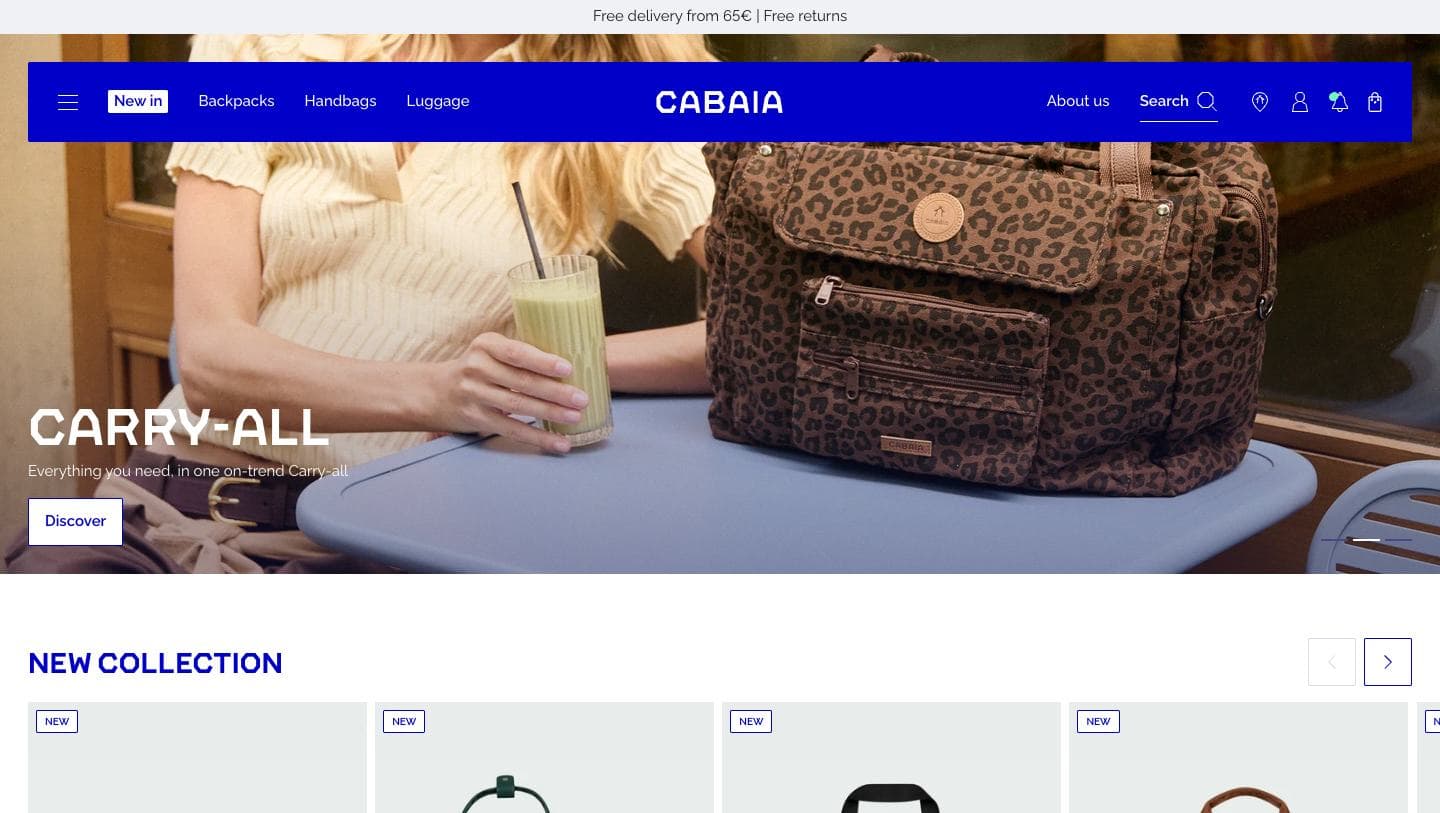
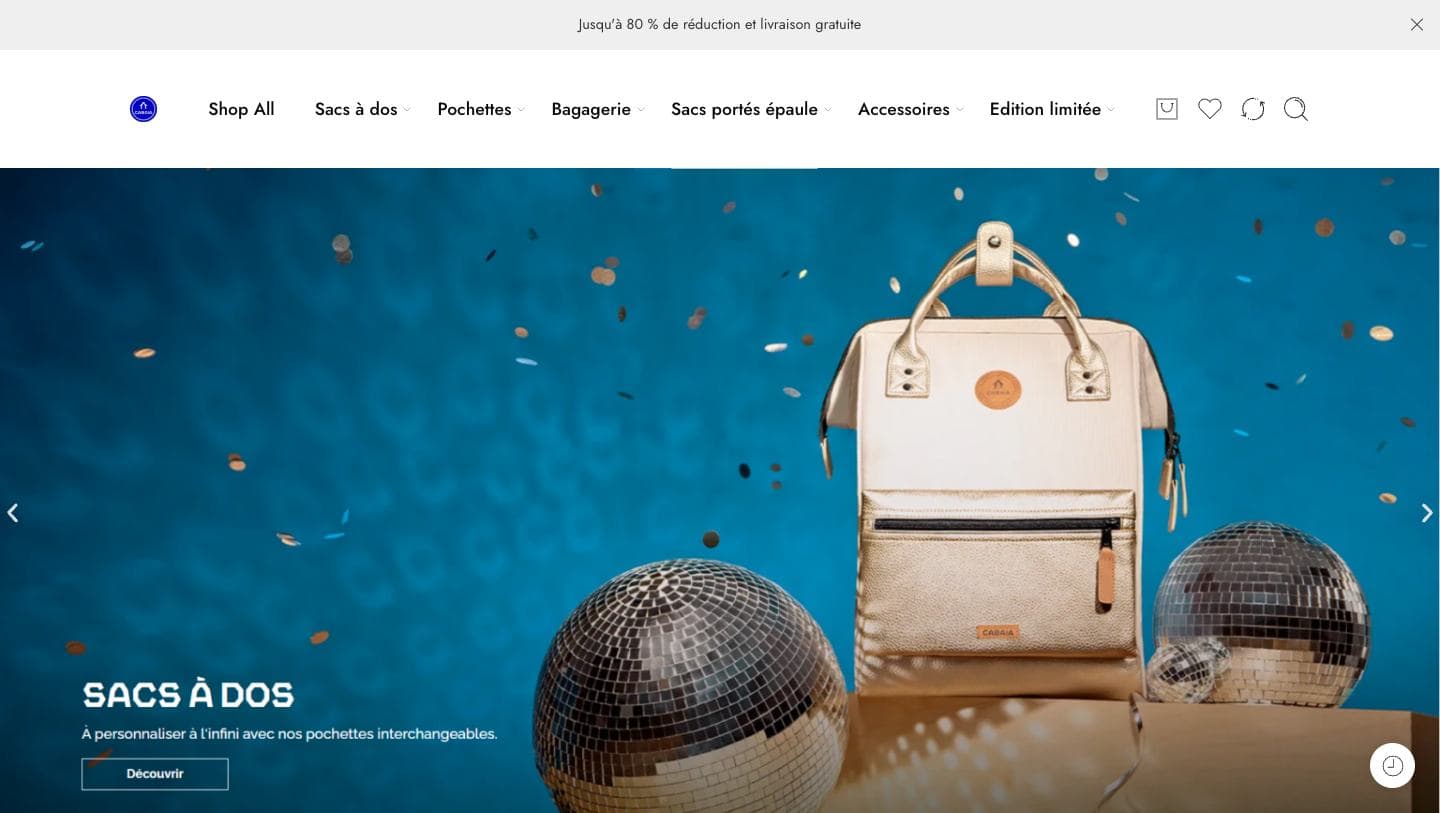
- 96%
- Visual similarity
- 97%
- Assessment confidence
- 80%
- Advertised reduction
- 27 Jun
- Domain registered
What the scanner saw
The official Cabaïa page is unmistakably retail: a prominent wordmark, product navigation, a large lifestyle hero, and collection merchandising below it. The fake uses the same ingredients, even when it rearranges them.
Its header is white instead of blue and the hero image is different, but the CABAIA identity, product universe, French navigation, and shopping controls all point to the same brand. It reads as an outlet variation, not a different company.
The fake changes the campaign, not the identity. That is what makes it convincing.
Four signals behind the finding
The domain adds only store to the Cabaïa brand name, a familiar pattern for storefront impersonation.
Backpacks, pouches, luggage, shoulder bags, and accessories mirror the official brand's retail categories.
The captured page listed named Cabaïa products such as Reykjavik, Valladolid, Maupiti, and Amiens luggage.
The fake leads with up to 80% off and free delivery. A €129 product is shown at €25.80.
The catalogue is the strongest evidence
A copied logo can be dismissed as misuse. A copied retail taxonomy is harder to explain. The store reproduces the brand's category structure and fills it with specific product names, prices, variants, and merchandising language.
The page title also presents the store as Cabaia, creator of clever and durable accessories. Paired with the domain and the product catalogue, this is a direct claim of brand identity.
How strong is the match?
The visual assessment recorded 96% similarity and 97% confidence. It identified the shared logo, product category, premium ecommerce styling, navigation, merchandising structure, and backpack imagery as impersonation signals.
The domain was registered on 27 June 2026 and was live when captured on 11 September. It had no mail exchange configured, but the storefront itself responded successfully and exposed a working commerce catalogue.
What the evidence supports next
A practical enforcement sequence based on the archived finding.
Preserve the commerce journey
Capture the homepage, product pages, discount claims, cart, checkout, DNS records, and registration date.
File the identity evidence
Lead with the exact brand name, product taxonomy, named catalogue items, and the domain's storefront framing.
Report the payment path
Trace the checkout provider and submit the archived store evidence before the payment account changes.
Monitor adjacent domains
Watch combinations of the brand with store, sale, outlet, bags, and backpacks across common retail extensions.
Why the discount matters
The 80% reduction is not separate from the impersonation. It gives the shopper a reason to accept the altered design, the extra word in the domain, and the slightly different navigation.
The store does not have to reproduce the current campaign exactly. It only has to look like a plausible place where Cabaïa might run a clearance sale.
Scan your own brand
What would the scanner find around your brand?
Run the same sweep across lookalike domains, storefronts, marketplaces, ads, and social accounts.
Next breakdown
Fake storefrontsA fake Nobody's Child store copied 12,817 products, and the brand's own terms of trade.
nobodyschildshop.com uses Nobody's Child's photos, product tags and legal pages, then marks everything about 70% off an inflated price. Three more lookalike stores were live, and two others had already been suspended.